
MCP Connectors for Managed Agents
MCP App Connectors for Managed Agents
MCP connectors allow your Superagents to interact with external applications like HubSpot, Notion, Make, Calendly, and more. Agents can authenticate, access tools, and perform actions in connected apps based on workflow triggers.
This article covers what MCP connectors are, which apps are supported, how to set them up in Agent Studio, and answers common questions about using these integrations.
What are MCP App Connectors?
MCP (Model Context Protocol) app connectors enable your Chat To Clients CRM Superagents to securely authenticate and interact with third-party applications. Once connected, agents can access tools and perform actions within these apps as part of automated workflows.
For example, a Superagent with Notion MCP connected can create pages, search content, or update databases in your Notion workspace. With HubSpot MCP, agents can create contacts, update deals, or log activities directly in HubSpot.
MCP connectors use secure OAuth authentication or direct login to give agents the permissions they need without exposing credentials. You control which tools each agent can access within the connected app.
Key Benefits
MCP app connectors expand what your Superagents can do by bridging Chat To Clients CRM workflows with external platforms. Here are the primary advantages:
Supported MCP Apps
Chat To Clients CRM supports a growing list of MCP app connectors. Each connector provides a set of tools that agents can use to interact with the connected application.
| MCP App | Description |
|---|---|
| HubSpot | Manage contacts, deals, and CRM activities in HubSpot. |
| Notion | Create pages, search content, and organize knowledge in Notion workspaces. |
| Apify | Run web scraping and automation tasks using Apify actors. |
| Make | Trigger Make scenarios and automate multi-app workflows. |
| Fathom | Access analytics and visitor data from Fathom. |
| Calendly | Schedule meetings and manage calendar availability via Calendly. |
| Canva | Generate and manage design assets using Canva's tools. |
| OpenArt | Create AI-generated artwork and visual content through OpenArt. |
| Monday.com | Manage work in boards, create and update items, and move tasks through statuses. |
| Cal.com | Book, reschedule, and manage meetings on connected calendars automatically. |
| Higgsfield | Generate cinematic AI videos and images from text or reference inputs. |
| GitHub | Read code, manage issues and pull requests, and trigger actions across development workflows. |
| Shippo | Compare carrier rates, purchase and print shipping labels, and track shipments. |
| Windsor.ai | Pull unified marketing and advertising data from 350+ sources and take actions on connected platforms, such as adjusting campaign budgets or pausing ads. |
| Vapi | Trigger and manage AI voice calls, route calls to voice assistants, and retrieve call details. |
| Google Drive | Find, organize, and manage files and folders across Google Drive. |
| Google Docs | Create, read, and edit documents in Google Docs. |
| Google Sheets | Read and update spreadsheets, pull data, write rows, and keep sheets in sync. |
| Google Slides | Create and update presentations and slide content in Google Slides. |
| Google Calendar | Create, update, and look up events across connected calendars. |
| Atlassian | Manage Jira issues, track work, and read or update pages in Jira and Confluence. |
| Apollo | Search Apollo's B2B contact database, retrieve verified emails and company data, and manage outreach sequences. |
| Fal | Generate image, video, and audio media using hosted AI models. |
| Zapier | Trigger actions and automations across 8,000+ apps through a single connector. |
| Magnific | Upscale and enhance low-resolution images into high-resolution, detail-rich visuals. |
| DataForSEO | Retrieve SERP results, keyword metrics, and backlink data for research and reporting. |
| Trello | Manage boards, create and move cards, update lists, and keep projects moving. |
| Asana | Manage projects, create and update tasks, move work across projects, and keep teams in sync. |
| ClickUp | Manage work by creating and updating tasks, docs, and lists across your workspace. |
| Fireflies | Access meeting transcripts, summaries, and action items from recorded calls. |
| Kling | Turn text prompts or reference images into short cinematic AI video clips. |
| Stripe | Create payment links and invoices, look up customers, and check transaction data. |
| Firecrawl | Crawl and scrape websites into clean, LLM-ready data for research and enrichment. |
| Nekt | Connect 200+ sources through Nekt's data layer and serve unified data to agents on demand. |
How to Connect an MCP App to Your Superagent
Follow these steps to add an MCP app connector to a Superagent in Chat To Clients CRM Agent Studio:
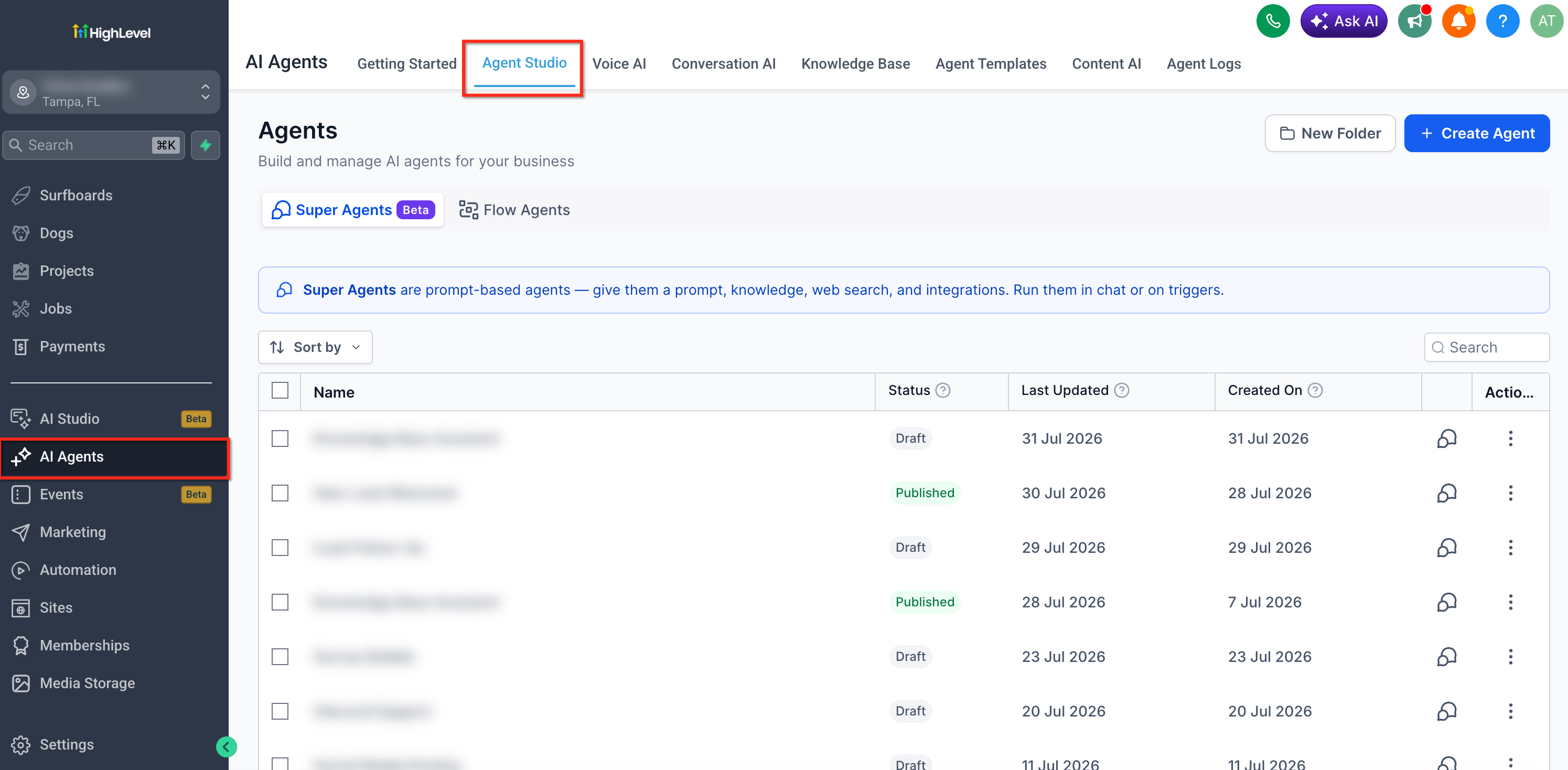
Navigate to Agent Studio in your Chat To Clients CRM account.
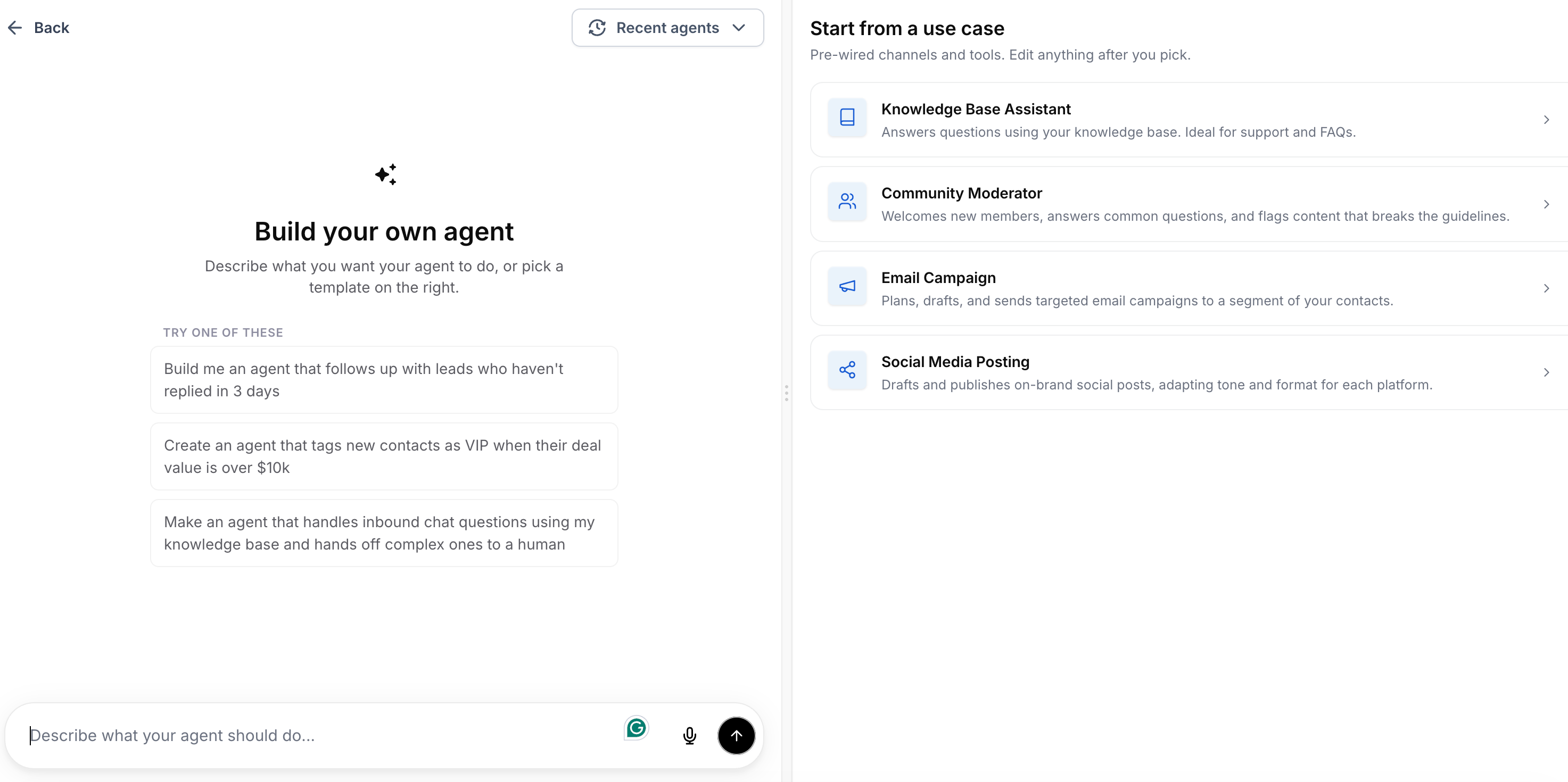
Create a new Superagent or open an existing one. You can also instruct the agent builder to add an MCP app during agent creation.
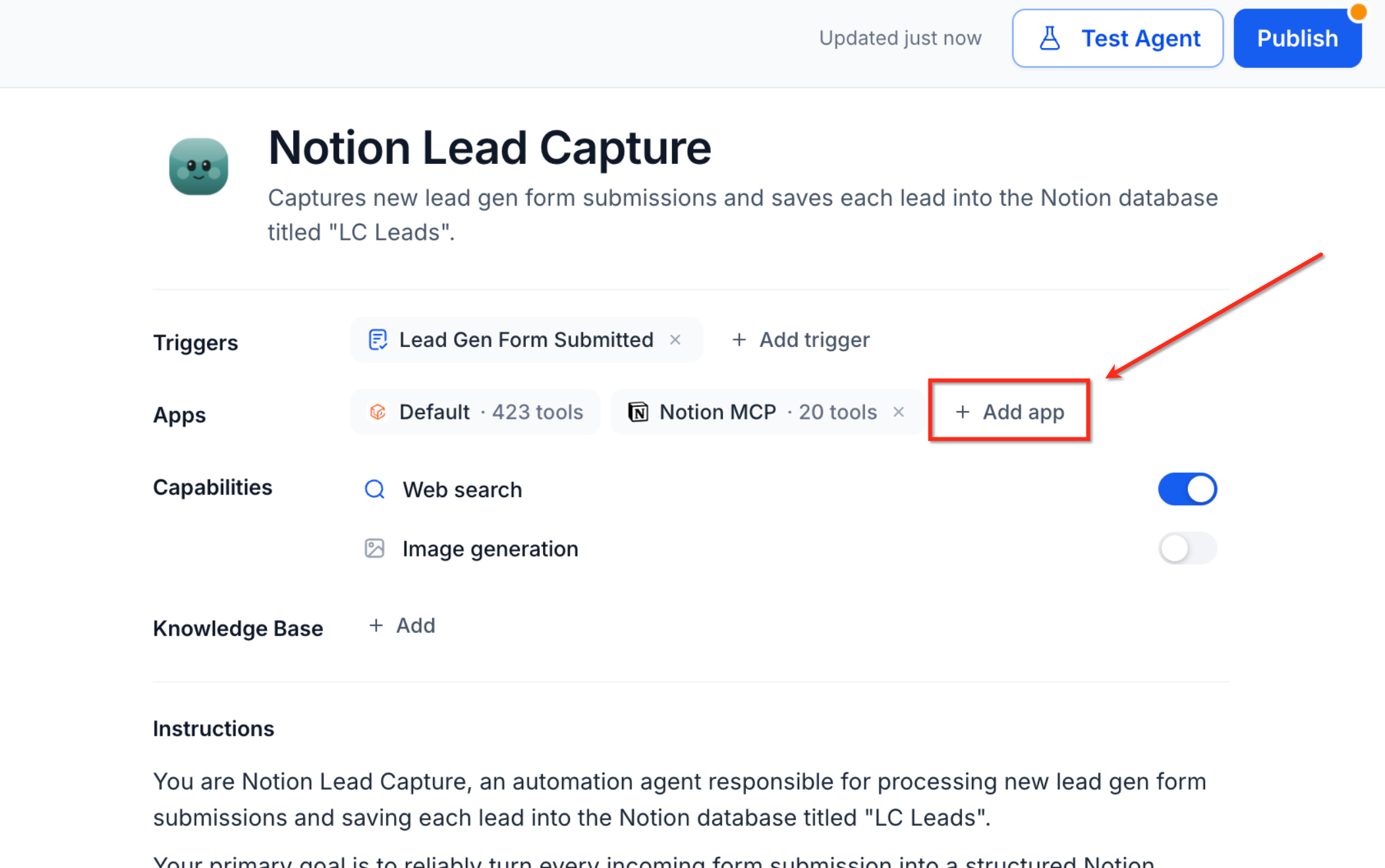
In the Apps section of the agent configuration, click "+ Add app" and select the MCP connector you want to integrate (e.g., Notion, HubSpot, Make).
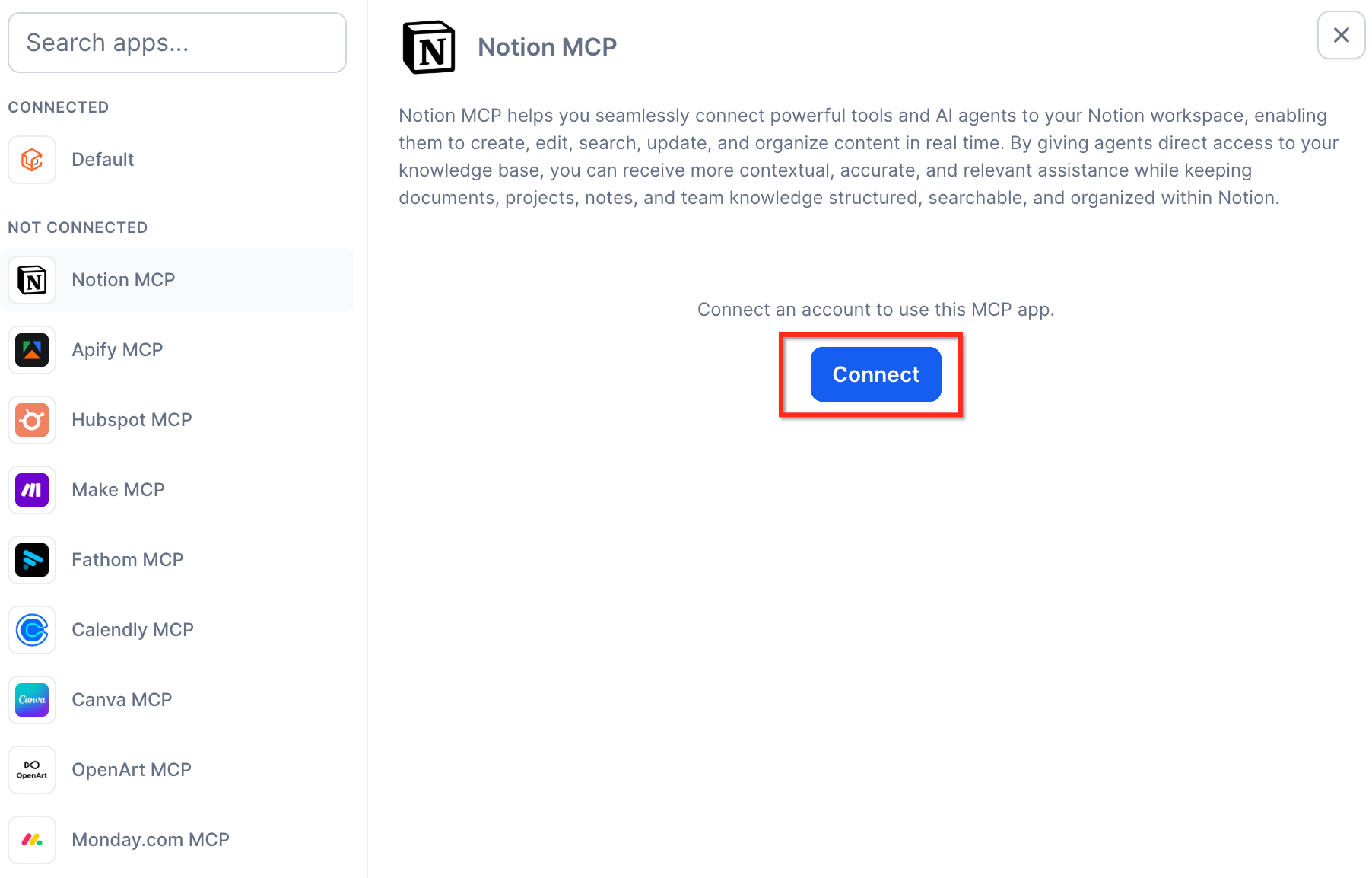
Click "+ Connect" next to the MCP app. You will be prompted to sign in using OAuth or a secure login flow. Grant the necessary permissions for the agent to access the app.
Once authenticated, a list of available tools for the MCP app appears. Check the boxes next to the tools you want the agent to use (e.g., "notion-create-pages", "notion-search", "get_board_items_page" for Monday.com).
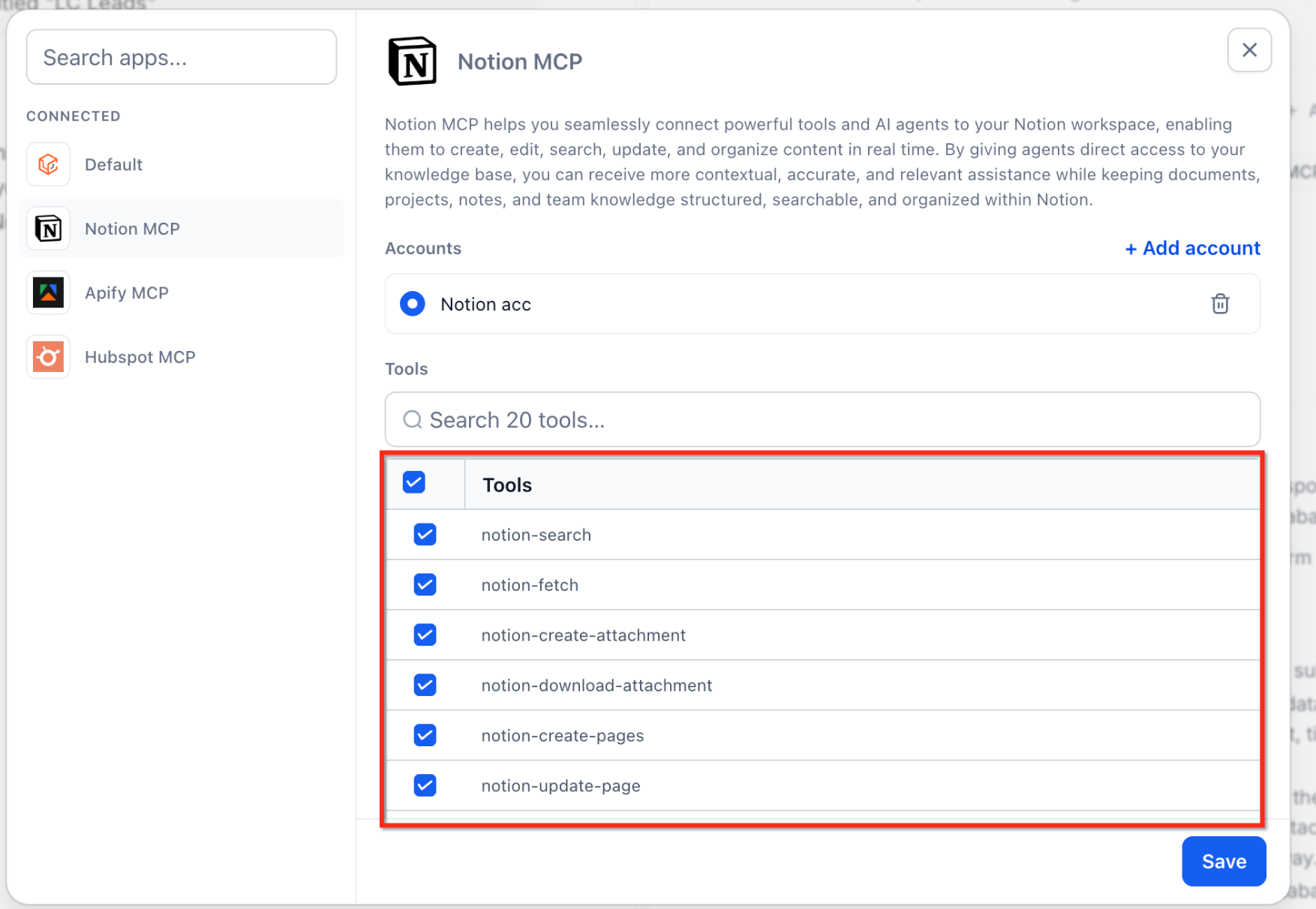
Click "Save" to apply the MCP app connection and selected tools to your Superagent.
Activate the agent using the configured trigger (e.g., "Lead Gen Form Submitted"). The agent will execute actions in the connected MCP app as part of its workflow.
You can connect multiple MCP apps to a single Superagent. Agents will use the appropriate tools based on the context and instructions you provide.